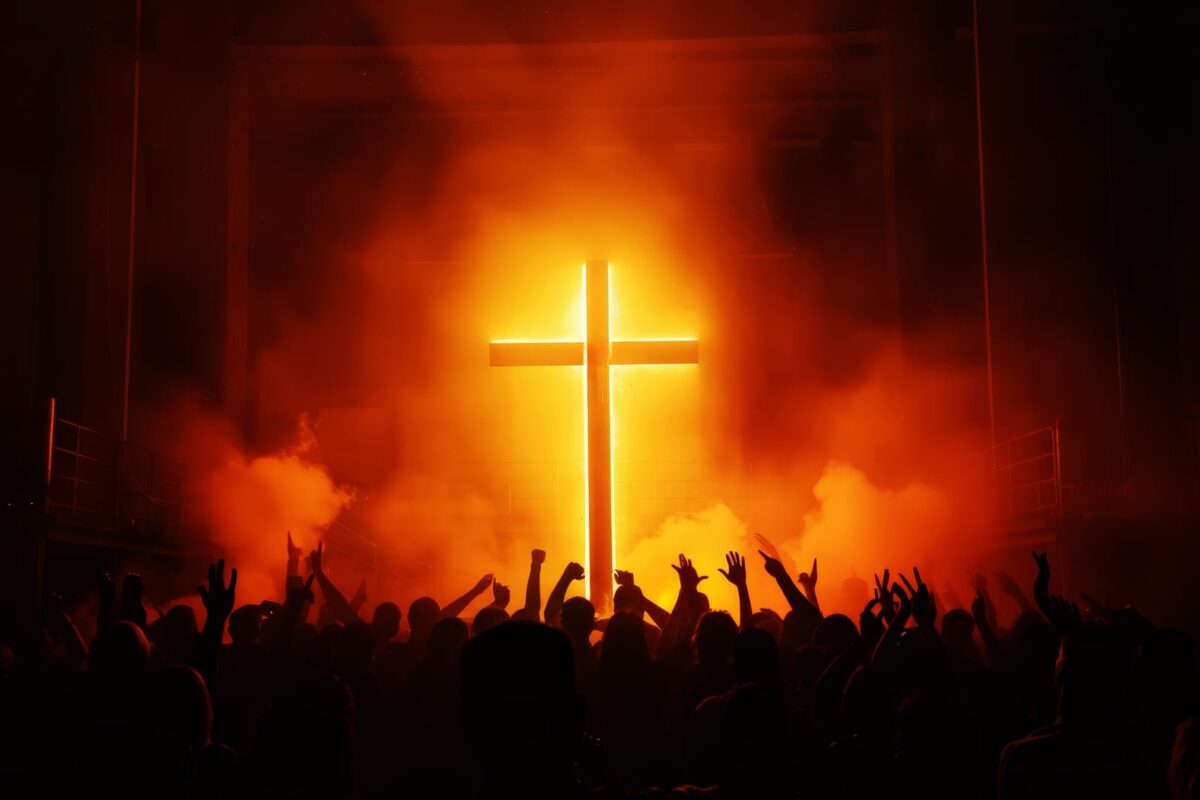
I’m not sure I’ve ever attended a worship service like Paul describes. Can you imagine seeing the Holy Spirit as the worship leader like this? In most of the churches I go to, we see a preacher and some musical offering. Speaking in tongues and prophesying doesn’t happen “when you meet together,” as Paul suggests.
With all that going on, it might seem hard to follow. But as Paul says, “For God is not a God of disorder but of peace, as in all the meetings of God’s holy people.” When we meet together as believers in a church setting, we are praising God with our focus on him while receiving his response, his blessing, a message from his Word. I don’t know about you, but I usually walk out of a time of worship with a fresh, peaceful feeling. And then reality steps back into view.
We need those times of worship to ground us and remind us of how loved we are. Our loving God wants to communicate with us. Paul’s description conveys that clearly. Whether it’s speaking in tongues or prophesying, those are both ways we can hear straight from the heart of God.
When someone speaks or prays in tongues, that language is coming straight from the Holy Spirit. If you’ve ever wondered what you should be praying for or how to pray during a hard circumstance, breaking into tongues lets the Spirit pray for you. Paul cautions that for tongues to be used in public, however, an interpreter must be present. Without that, the rest gathered will miss out on understanding what the Spirit is trying to say.
Paul’s caution to women is hard to hear, being a woman myself. His words can be taken as a painful rebuke, although I don’t think Paul intended that. Remember the culture in his day treated women a lot differently than anything we’ve ever lived through. Suffice it to say, I look at the intention of his words and rely on the Holy Spirit to guide me during times of worship. I certainly am never silent, but I love to sing worship and praise.
Paul’s closing remarks regarding worship practice are profound. “But be sure that everything is done properly and in order.” This really affirms for me the order of worship that I grew up with in the Lutheran Church. I never fully appreciated the liturgy, what we called the order of worship. All the elements of worship had a time and place, and for good reason. The songs and prayers might change from week to week, but you could always count on what came next. There was comfort in that, and it’s fantastic to see that Paul told us to worship like this.
Paul said that what he was telling us is a command from God. That sounds important to me, and I want to listen to what God desires. I wonder why churches today aren’t heeding Paul’s words from God? Hopefully, I’ll one day attend a worship service where prophesying, speaking in tongues, and interpretation are happening. Until that day, I will worship King Jesus with all that I am, living my life to honor and please Him.
 Let’s pray. Lord Jesus, I worship and adore you. You are my king. Thank you for all you have done for me: your grace and forgiveness, your mercy and love. I want to use my gifts to honor you and help others. I look forward to the day when I can be part of worship as Paul describes. Until then, I will give you my life. Direct me and use me by your strength. In Jesus’ name. Amen.